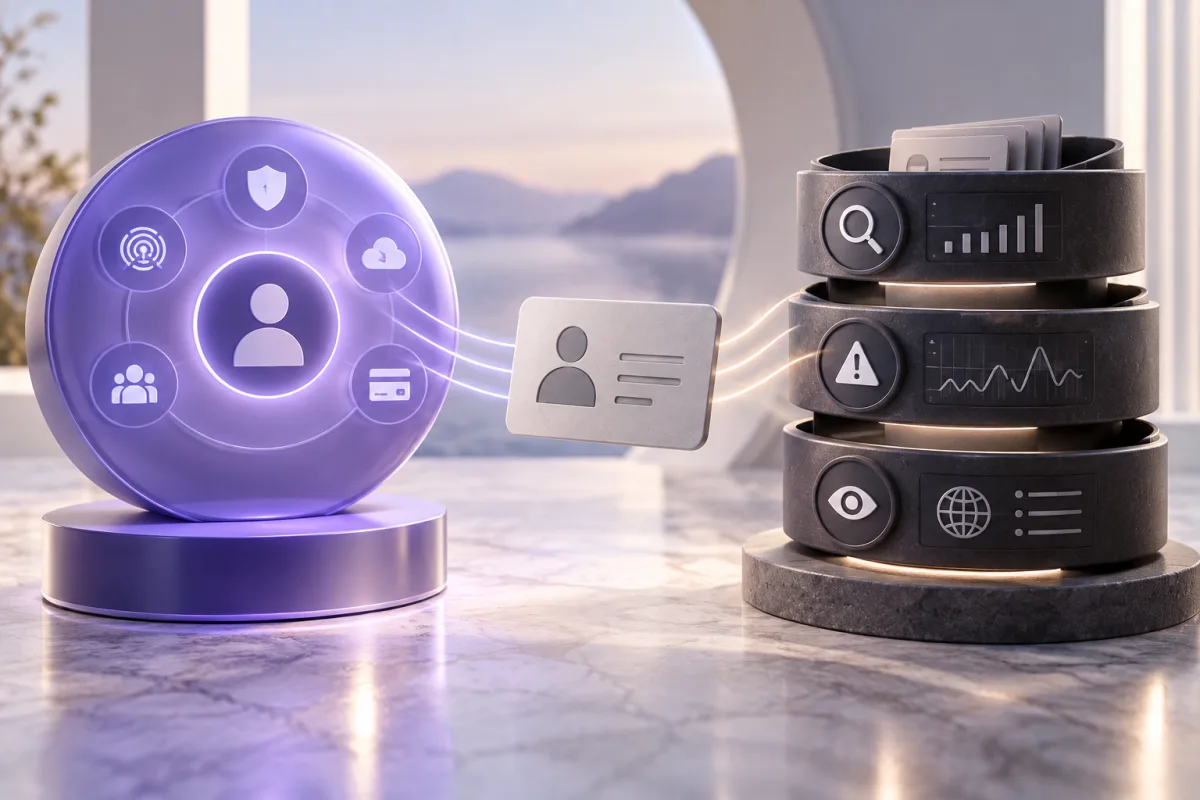


Compare the two specific plans that meet your minimum requirements. Bureau coverage, recovery assistance, and household eligibility matter more than whether one entry price looks lower.
Pick comparable plans first
Both providers describe identity-protection offerings with different plan choices. A fair comparison starts by identifying the minimum monitoring and support you need. If one candidate does not meet a required feature, comparing its lower price adds little value.
Record the chosen plan name, membership type, billing cycle, and the date you checked it. Offers can vary by purchase route, and older articles may use names or inclusions that no longer match the current checkout.
| Requirement | Question for both providers |
|---|---|
| Credit monitoring | Which named bureaus are monitored in this plan? |
| Other identity alerts | Which information and account categories are included? |
| Restoration | What help begins when I report suspected theft? |
| Household coverage | Who qualifies and who must enroll separately? |
| Billing | What will the next full renewal cost? |
Give response support its own comparison
LifeLock publishes restoration information, while Identity Guard lists support features within its plan materials. Ask each provider to explain what a case looks like from the first report to completion. Clear operational answers matter more than premium-sounding labels.
Find out which organizations the service can contact on your behalf, what authorization is required, and what evidence you must supply. You may still need to speak with banks or government agencies directly. Assistance should make that process easier to understand, not obscure your responsibilities.
If you have already experienced suspected theft, describe that timing before buying. Do not assume a new subscription retroactively covers an earlier event or that an open case can be transferred from another provider.
Keep scores, reports, and alerts separate
A credit score summarizes information using a particular model. A report contains entries you can inspect. Monitoring notifies you about selected changes. Compare each feature independently instead of treating them as three names for the same service.
For example, a reader may receive a score through a bank but still want alerts from more credit files. Another reader may mainly need to inspect and dispute a particular report entry. The right product decision depends on that difference.
Free official report access can remain useful alongside a paid service. Preserve the ability to obtain the underlying information and contact the relevant institution, even if a subscription presents it in a convenient dashboard.
A practical decision rule
Choose the plan whose documented coverage meets your requirements and whose support process you understand at a sustainable renewal cost. If neither provider gives a clear answer about a required feature, keep that uncertainty in the comparison rather than assuming the more expensive plan resolves it.
For a single adult primarily interested in broader credit visibility, bureau coverage may be decisive. For a household worried about the workload after theft, member eligibility and case assistance may deserve more weight. These are different priorities, not evidence of a universal winner.
Read the LifeLock review and the Identity Guard review for provider-specific questions. Our assessment does not measure alert delay, support quality, or recovery success, and it should not be read as a guarantee of those outcomes.
Sources & review notes
Source review: September 25, 2026. This is a documentation-based assessment; we have not measured alert speed, product performance, or support outcomes. Product terms can change.
About the author
 Luca MoreauIdentity protection & practical security
Luca’s coverage turns identity-protection and everyday security questions into manageable checklists. The weekly briefings cover accounts, networks, and safer browsing, with a practical action readers can complete in a single sitting.
View profile and articles