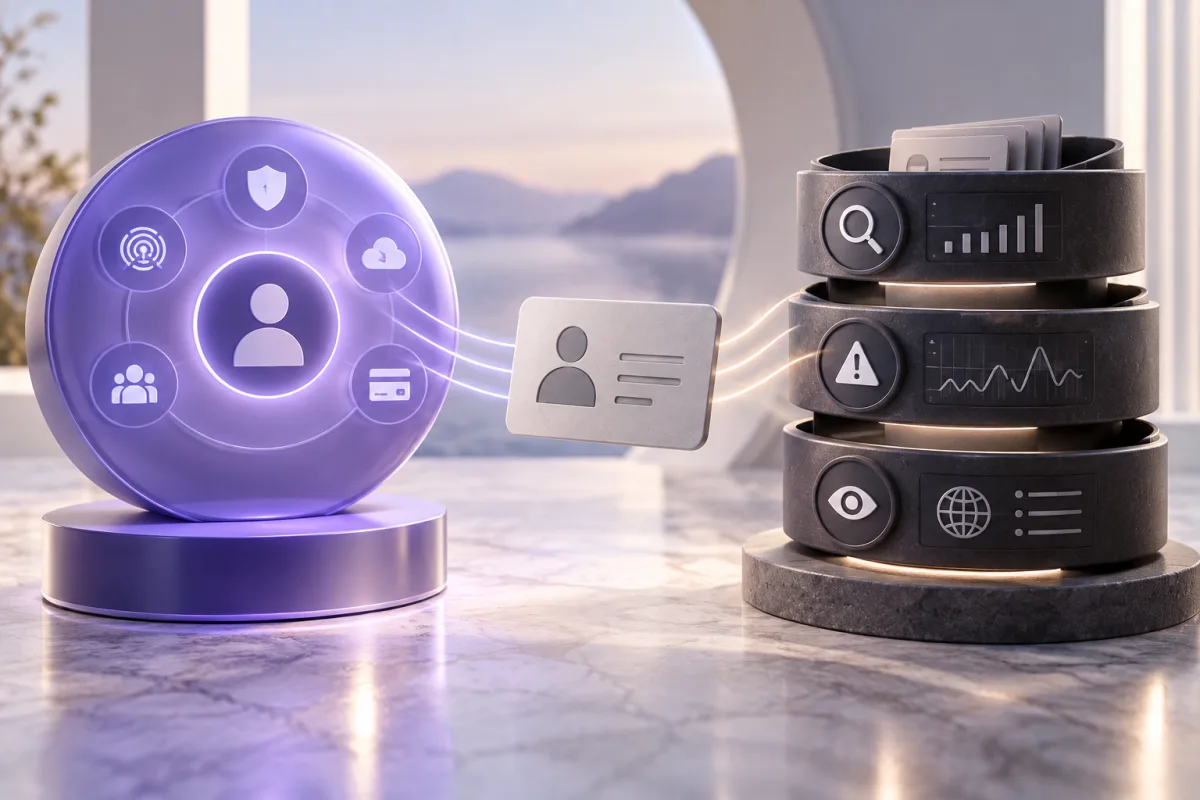
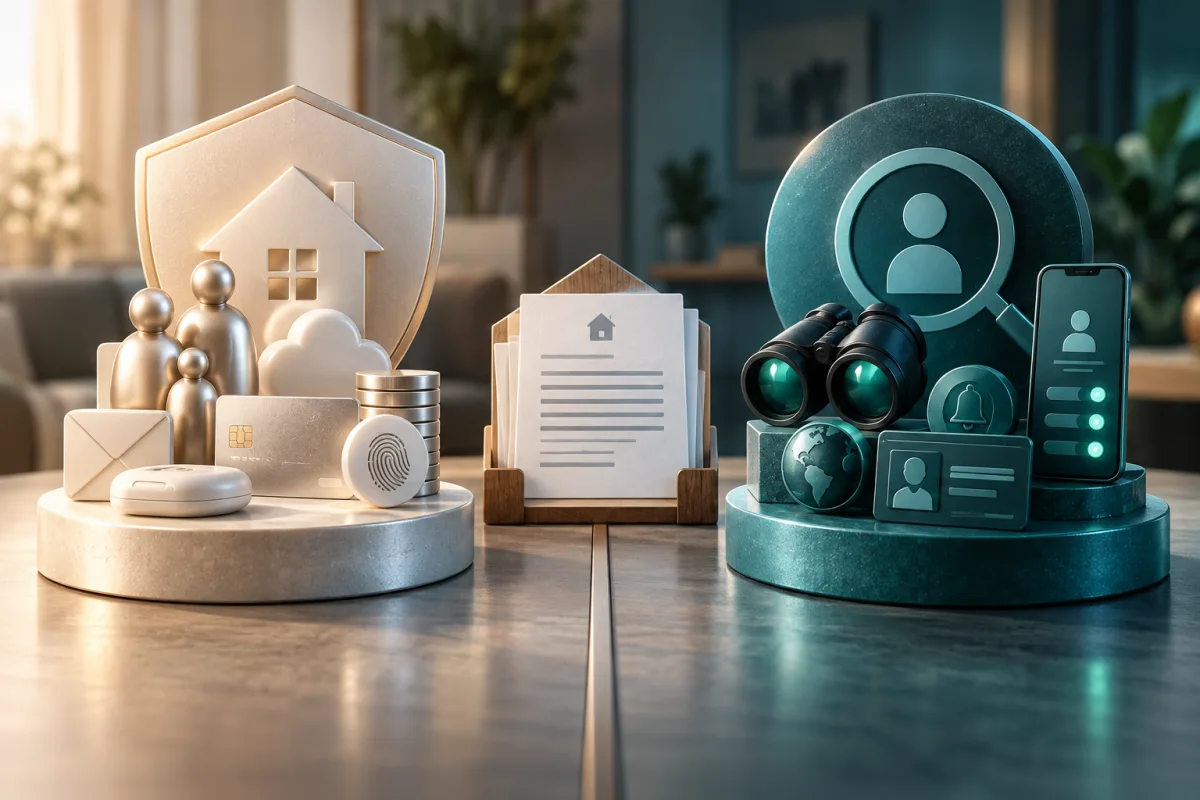
Services that include dark-web monitoring
Compare these wider identity-protection subscriptions if you need more than a breach lookup. No service observes the entire dark web; the important question is what you can do after an alert.
We may earn a commission from qualifying links. Affiliate disclosure · How we compare

Aura
Aura combines identity and credit monitoring with digital-security tools. It may fit a U.S. household that wants to manage several kinds of alerts in one subscription. Compare the people covered, which information you must enroll, and the recovery assistance available after a suspected problem.
- Identity monitoring with credit-related alerts
- Individual and family options with additional security tools
Before you choose Check U.S. eligibility, enrollment requirements, and the terms of any insurance. Monitoring can alert you to a problem; it cannot prevent every misuse of your identity.

LifeLock
LifeLock offers identity-monitoring subscriptions with access to restoration specialists. It is worth comparing if help responding to identity theft matters as much as receiving alerts. Its plans differ, so match the level of credit monitoring and recovery benefits to what you actually need.
- Identity alerts and access to restoration specialists
- Several plan levels, with Norton bundles also available
Before you choose Credit-bureau coverage and reimbursement limits vary by tier. Read eligibility and exclusions instead of treating an advertised maximum as guaranteed compensation.

Identity Guard
Identity Guard offers tiered monitoring plans for individuals and families. It is a candidate for readers who want to compare the type of information monitored before paying for a broader package. Look at the plan table closely: a lower price can mean a different set of credit and financial alerts.
- Data-breach and dark-web monitoring options
- Individual and family subscriptions at several coverage levels
Before you choose Credit monitoring and other features differ by tier. Confirm which adults and children are covered and what assistance follows an alert.

IDShield
IDShield pairs identity monitoring with restoration assistance from licensed private investigators. Consider it when the practical response to an identity problem is a priority. Review the steps for opening a case, what the service can handle on your behalf, and the relevant individual or family coverage.
- Identity and credit-monitoring options
- Restoration assistance from licensed private investigators
Before you choose Check geographic eligibility, credit coverage, family definitions, and benefit terms. Alerts are not a substitute for reviewing your accounts and responding promptly.
Sources and how to use this shortlist
These summaries use provider documentation and our selection advice, not hands-on performance scores. Features, plans, and regional availability can change. Confirm the first payment, renewal cost, and cancellation terms before subscribing.
- Aura product documentation
- LifeLock product documentation
- Identity Guard product documentation
- IDShield product documentation
Sources checked September 25, 2026. Full reviews explain the scope and limitations in more detail.

Start with a reputable breach-notification tool for exposed email accounts. Consider a broader identity service only when you need additional identifiers monitored or help responding. No service can inspect every private criminal source.
Define what you want monitored
Dark-web monitoring is a broad marketing term. One product might look for an email address in known breach data; another might watch additional identifiers or combine that search with credit alerts. Those are different services even when the checkout page uses the same phrase.
Make an inventory of the information you want covered without placing the sensitive values in a shopping spreadsheet. For example, record “primary email” or “phone number,” not the full details. Then check whether each provider actually accepts and monitors that type of information.
| Need | Starting point | Limitation to keep in view |
|---|---|---|
| Known breaches affecting an email address |  Have I Been Pwned Have I Been Pwned | An empty result does not prove no exposure |
| Monitoring alongside security tools | Aura | Check identifiers and the actual plan |
| Identity alerts with response assistance | LifeLock | Detection and recovery are separate functions |
| Comparing broader monitoring tiers | Identity Guard | Coverage depends on the selected package |
Read a breach result carefully
Have I Been Pwned explains its dataset and notification model in its FAQ. Its role is to surface information from breaches it knows about, not to certify that an account is currently secure. A date on a result may describe the breach or its addition to the service; do not assume the password was stolen today.
After an alert, identify the affected account and the fields involved. An email-address exposure calls for different follow-up from a reused password. Visit the service directly and review sign-in activity, recovery details, and relevant account notices.
Be especially careful with messages claiming to be breach alerts but demanding a password, a payment, or a verification code. A legitimate reason to check an account does not make every alert email authentic. Keep a trusted route to the account separate from the message.
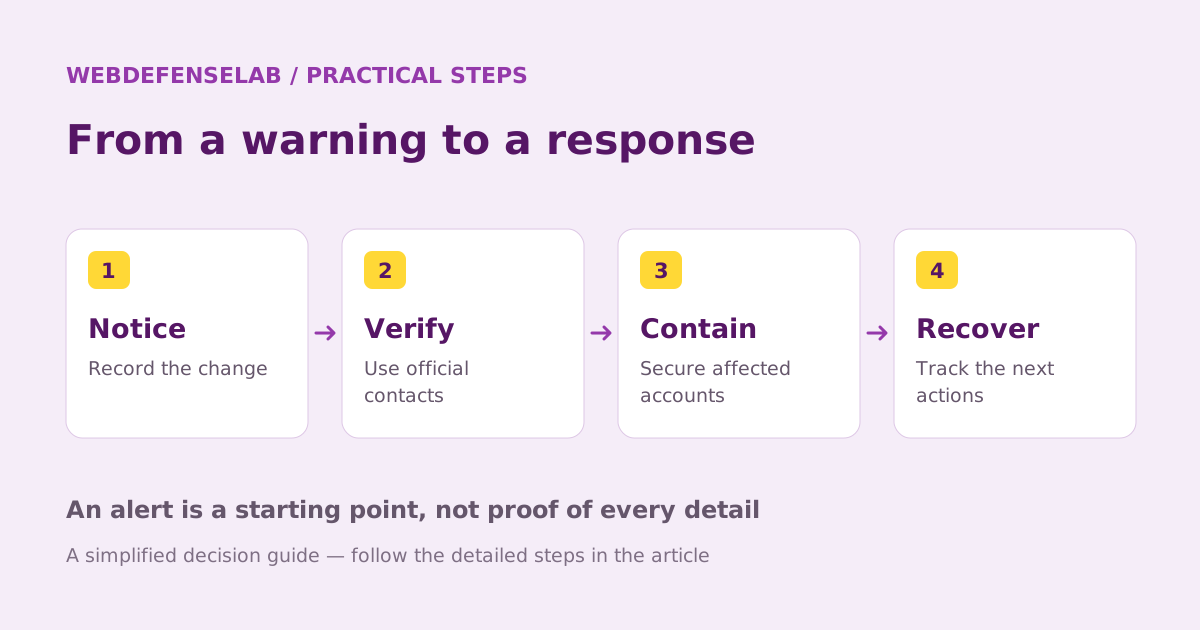
Turn a warning into a useful action
If a password may be exposed, replace it with a unique one and change any other account where it was reused. Start with accounts that control access elsewhere, such as email. Review active sessions and recovery methods instead of assuming a password change solves every form of unauthorized access.
If an identifier that cannot easily be changed is involved, the response is ongoing monitoring and appropriate restrictions. For U.S. credit concerns, consult the relevant bureau and official recovery guidance. Avoid treating a password tool as a complete remedy for document or financial identity theft.
Keep a brief record of the account, what you changed, and when. You do not need to retain the exposed password in the incident log. A password manager can help you identify reused credentials and store replacements safely.
How to compare paid monitoring
Ask how an alert explains the source, exposed fields, and recommended next action. A large number of alerts is not necessarily useful if they repeat the same old incident without context. Look for an understandable history and a clear route to help when you cannot interpret the event.
Before submitting additional personal information, read the provider’s collection and retention explanation. The benefit of monitoring another identifier should be worth the data you supply. Avoid uploading identity documents to an unfamiliar “free scan” simply to satisfy curiosity.
If you mainly want to improve account protection, a password manager and a recovery plan may address more of your immediate need. If you need wider support, compare identity-protection services with the distinction between detection, prevention, and restoration kept visible.
Sources & review notes
Source review: September 25, 2026. This is a documentation-based assessment; we have not measured alert speed, product performance, or support outcomes. Product terms can change.
About the author
 Luca MoreauIdentity protection & practical security
Luca’s coverage turns identity-protection and everyday security questions into manageable checklists. The weekly briefings cover accounts, networks, and safer browsing, with a practical action readers can complete in a single sitting.
View profile and articles