Ad-blocking options for Android
Compare supported mobile apps and how they filter traffic. Android tools that use a local VPN connection may conflict with another VPN, so check the intended setup first.
We may earn a commission from qualifying links. Affiliate disclosure · How we compare

uBlock Origin
uBlock Origin is available for Firefox on Android through the official Firefox Add-ons listing. It is a free browser-only option for readers happy to use Firefox, with filter lists and per-site controls. It is not an extension for ordinary Chrome on Android.
- Free filtering inside Firefox on Android
- Per-site controls and maintained filter lists
Before you choose This recommendation requires Firefox on Android. It does not block ads across unrelated Android apps.

AdGuard
AdGuard has separate Android products with different filtering scope. Check whether you need browser-specific blocking or a wider app, then review its installation instructions and permissions. If local VPN filtering is used, confirm compatibility with your existing VPN.
- Android-specific product choices
- Browser and app scope need separate checks
Before you choose A local VPN used for filtering is not automatically a remote privacy VPN. Verify whether both tools can operate together.

Adblock Plus
Adblock Plus documents a blocker for Samsung Internet and a separate Adblock Browser option on Android. Choose the product for the browser you intend to use; neither should be mistaken for a desktop extension installed into ordinary mobile Chrome.
- Samsung Internet integration to evaluate
- Separate Adblock Browser option
Before you choose Confirm the browser and installation source. Blocking remains limited by that product’s scope.

Total Adblock
Total Adblock offers browser extensions and mobile apps aimed at reducing advertising and tracking. It is worth comparing if you prefer a dedicated blocker rather than a wider VPN subscription. Confirm the browser or app you use and try everyday sign-ins, shopping, and video playback.
- Desktop browser extensions and Android / iOS apps
- Ad and tracker filtering, with capabilities varying by platform
Before you choose Full access requires a subscription. Video-site and in-app blocking can be limited; check the renewal price and avoid assuming every ad will disappear.

Surfshark CleanWeb
CleanWeb is a filtering feature within Surfshark’s product range. It makes sense to investigate if you already use, or are considering, Surfshark. The VPN app filters while connected; supported desktop browser extensions offer a separate filtering experience without requiring a VPN connection.
- Available within Surfshark apps on supported platforms
- Separate desktop browser extension for Chrome, Firefox, and Edge
Before you choose App filtering and extension filtering are different layers. Neither should be treated as a guarantee of removing ads inside every mobile app or video player.
Sources and how to use this shortlist
These summaries use provider documentation and our selection advice, not hands-on performance scores. Features, plans, and regional availability can change. Confirm the first payment, renewal cost, and cancellation terms before subscribing.
- uBlock Origin product documentation
- AdGuard product documentation
- Adblock Plus product documentation
- Total Adblock product documentation
- Surfshark CleanWeb product documentation
Sources checked September 25, 2026. Full reviews explain the scope and limitations in more detail.
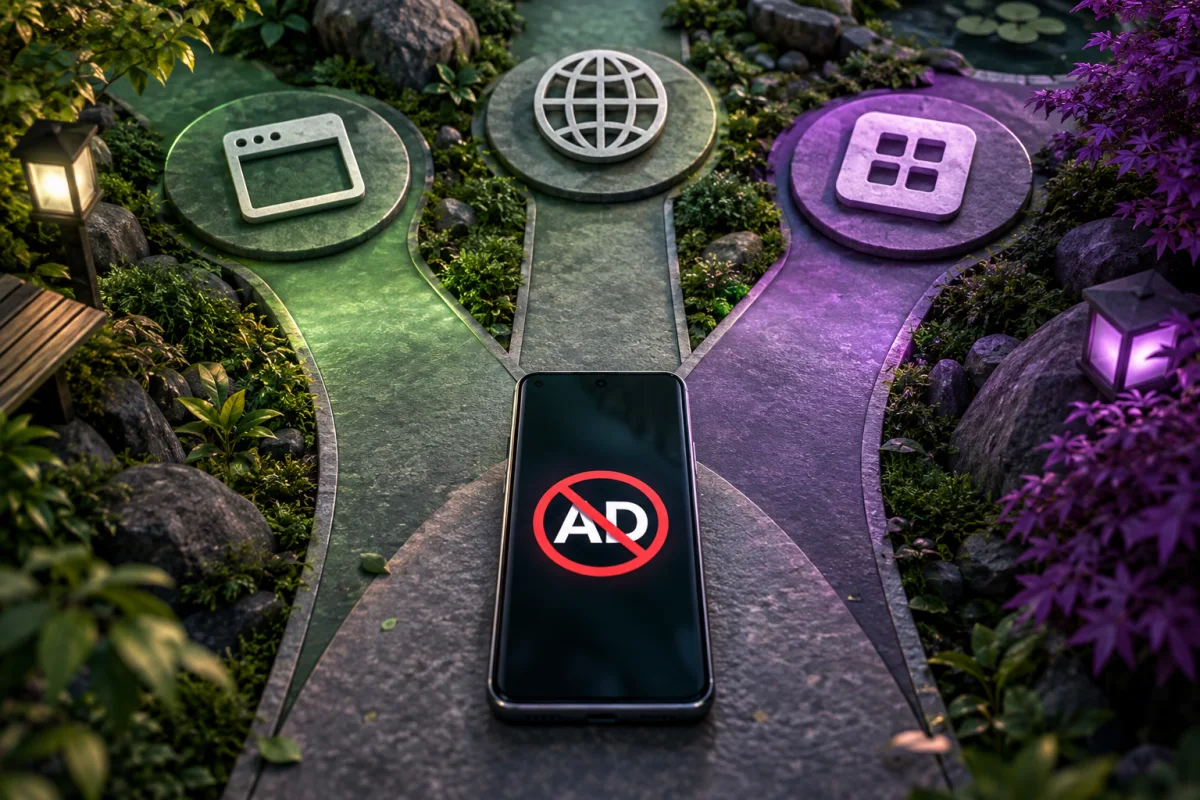
Choose the filtering layer that matches the app you use. Firefox extensions, supported browser features, and DNS filtering have different reach and limitations.
Choose for the actual environment
Android allows a range of browsers, but their extension support is not identical. Check the actual browser and version before following a desktop guide. The official uBlock Origin project documents supported Firefox configurations; other browsers need their own compatible approach.

Options worth investigating
For a browser-first setup, inspect a maintained blocker supported by that browser. For broader domain filtering, investigate a reputable DNS service with a clear privacy policy. If you need an application-level filter, check its distribution route, permissions, and VPN compatibility carefully.
A setup you can understand
- Name the app or browser where the unwanted content appears.
- Verify support using the maintainer’s current documentation.
- Review requested permissions and any local VPN configuration.
- Test a login, payment flow, video, and normal notification delivery.
The boundary to keep in mind
An app using Android’s VPN interface may conflict with a separate VPN. Do not assume that running two such tools provides two layers simultaneously. Use an officially documented combination or choose which role matters most.
A practical example
If pop-ups appear as notifications outside the browser, review site-notification permissions. Blocking an advertising domain may not revoke a permission you previously granted to a malicious site.
When a website breaks
Test one change at a time. Pause filtering for that site, reload, and confirm whether the broken control returns. If it does, use the narrowest exception supported by the tool. A checkout failure should not lead you to disable every browser protection permanently.
Keep the blocker updated and review the maintainer’s troubleshooting guidance. Additional filter lists can be useful for a particular language or annoyance, but more lists are not automatically better. Overlap can make both performance and diagnosis harder.
Before paying for a blocker
Compare the actual improvement with a reputable free alternative and your browser’s built-in settings. If you choose a subscription, note the total first charge, renewal price, supported devices, and cancellation route. A free trial can have different restrictions from the paid product.
Continue with our complete ad-blocker guide for a comparison of browser and DNS filtering. For video-specific concerns, the YouTube guide explains the distinction between ads, sponsorships, and account security.
Questions, answered
Can any blocker remove every advertisement?
No. Sites, apps, browsers, and delivery methods change. Evaluate a specific environment and avoid permanent guarantees.
Should I install several blockers together?
Start with one maintained primary tool. Overlapping blockers can cause conflicts and make it hard to tell which setting broke a site.
Sources & further reading
Source review: September 25, 2026. Product features and subscriptions can change; confirm the exact plan before purchase.
About the author
 Sofia LindBrowsers, ad blocking & websites
Sofia’s coverage follows browser privacy, extension permissions, content filtering, and the practical management of hosted websites. Her articles explain the difference between hiding an advertisement, blocking a request, and protecting an account.
View profile and articles