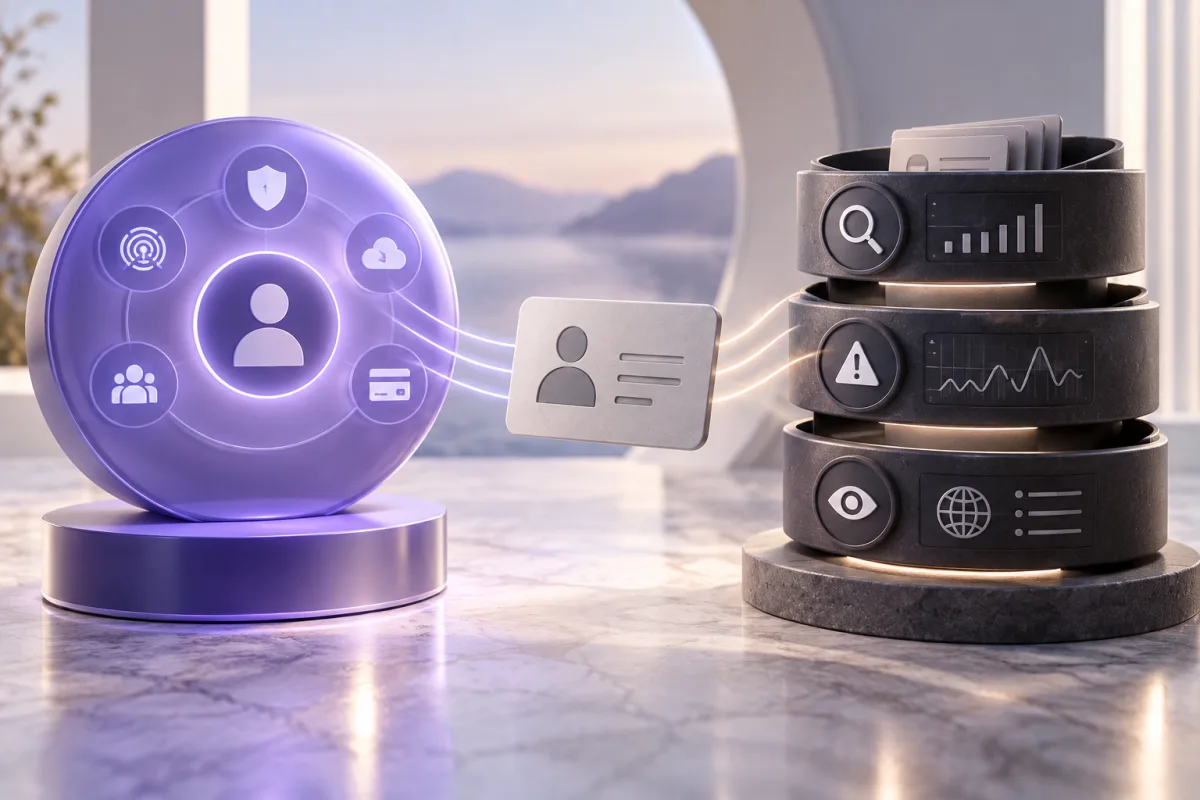
LifeLock alternatives at a glance
Compare alternatives by the monitoring you need and the assistance you would use after a problem. Check U.S. eligibility and household coverage rather than choosing only on the introductory price.
We may earn a commission from qualifying links. Affiliate disclosure · How we compare

Aura
Aura combines identity and credit monitoring with digital-security tools. It may fit a U.S. household that wants to manage several kinds of alerts in one subscription. Compare the people covered, which information you must enroll, and the recovery assistance available after a suspected problem.
- Identity monitoring with credit-related alerts
- Individual and family options with additional security tools
Before you choose Check U.S. eligibility, enrollment requirements, and the terms of any insurance. Monitoring can alert you to a problem; it cannot prevent every misuse of your identity.

Identity Guard
Identity Guard offers tiered monitoring plans for individuals and families. It is a candidate for readers who want to compare the type of information monitored before paying for a broader package. Look at the plan table closely: a lower price can mean a different set of credit and financial alerts.
- Data-breach and dark-web monitoring options
- Individual and family subscriptions at several coverage levels
Before you choose Credit monitoring and other features differ by tier. Confirm which adults and children are covered and what assistance follows an alert.

IDShield
IDShield pairs identity monitoring with restoration assistance from licensed private investigators. Consider it when the practical response to an identity problem is a priority. Review the steps for opening a case, what the service can handle on your behalf, and the relevant individual or family coverage.
- Identity and credit-monitoring options
- Restoration assistance from licensed private investigators
Before you choose Check geographic eligibility, credit coverage, family definitions, and benefit terms. Alerts are not a substitute for reviewing your accounts and responding promptly.
Sources and how to use this shortlist
These summaries use provider documentation and our selection advice, not hands-on performance scores. Features, plans, and regional availability can change. Confirm the first payment, renewal cost, and cancellation terms before subscribing.
Sources checked September 25, 2026. Full reviews explain the scope and limitations in more detail.

Choose an alternative by the reason you are leaving: duplicated security software, unclear plan coverage, recovery support, or cost. Preserve any open case records before changing subscriptions.
Name the problem before changing providers
A switch is useful only if the new arrangement fixes something concrete. Perhaps the renewal is higher than expected, a household member is not eligible, or you already have several of the included security tools. Write down the reason and the minimum features the replacement must provide.
Do not choose only by the first advertised monthly equivalent. Note how much is charged at purchase, which term it covers, and what happens when that term ends. A discounted annual plan can require a larger immediate payment than a monthly subscription.
| Reason to switch | Consider | Question to resolve |
|---|---|---|
| You want one security bundle | Aura | Will it replace tools you actually use? |
| You want a tiered monitoring comparison | Identity Guard | Which tier includes the required monitoring? |
| You prioritize restoration assistance | IDShield | What does the case-handling process require? |
| You mainly need a basic checking routine | Official reports, account alerts, and freezes | Can you reliably maintain the routine yourself? |
Understand what changes when you cancel
Before ending a subscription, download relevant alerts, case notes, and receipts through the official account. Ask the provider how an open restoration matter and any potential claim are treated after cancellation. Do not assume a new provider will take over a case that began earlier.
Check whether cancellation stops renewal or immediately ends access. Save written confirmation and the date of the final coverage period. If the service includes a password vault or other daily tool, plan that migration separately so losing the subscription does not disrupt account access.
For a family, tell each adult what will change. They may need to enroll independently, approve a new invitation, or update notification preferences. A primary account holder should not silently move another adult’s sensitive data between services.
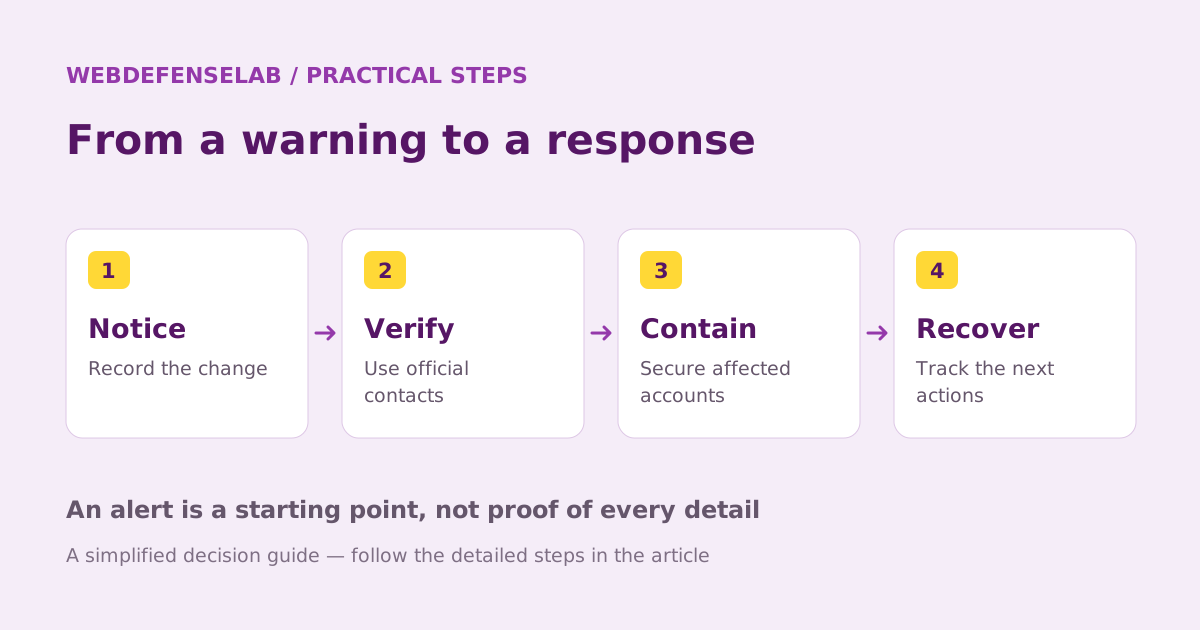
Compare alternatives against one checklist
Aura presents a wider digital-security bundle. Identity Guard publishes distinct protection tiers. IDShield emphasizes monitoring and restoration assistance. These positioning differences help create a shortlist; they do not establish which service will handle your individual case most effectively.
For each candidate, record the monitored data categories, credit bureaus, support route, household eligibility, and renewal charge. If insurance is included, read the policy conditions and excluded events. Use the same household size and coverage requirements for every quote.
Consider whether your existing bank, employer benefit, or breach notice already includes some monitoring. Duplicated alerts may be harmless, but paying twice for the same limited coverage can be poor value. Check the duration and limits of any included service.
A switch plan you can actually follow
An example: a reader wants to leave because they use only identity alerts and never open the bundled antivirus. They first compare a focused monitoring plan and a routine of free reports plus account alerts. They then assess how much they value guided recovery support, rather than assuming every paid alternative will save money.
Set a reminder to verify the new account’s notification address and enrollment status. Keep the old cancellation receipt until you have confirmed the expected billing outcome. Review the replacement after a month: are the alerts understandable, and do you know where to get help?
For a closer product comparison, see Aura vs. LifeLock or LifeLock vs. Identity Guard. Our comparisons rely on published documentation; they do not claim measured response times or guaranteed recovery.
Sources & review notes
Source review: September 25, 2026. This is a documentation-based assessment; we have not measured alert speed, product performance, or support outcomes. Product terms can change.
About the author
 Luca MoreauIdentity protection & practical security
Luca’s coverage turns identity-protection and everyday security questions into manageable checklists. The weekly briefings cover accounts, networks, and safer browsing, with a practical action readers can complete in a single sitting.
View profile and articles