
For U.S. readers, begin with official report access and the free tools you already have. Compare a paid monitoring plan when you need wider bureau coverage, more organized alerts, or recovery assistance.
Choose the information you actually need
A score, a report, and a monitoring alert answer different questions. A score summarizes credit information through a model; a report shows underlying entries; an alert flags a selected change. Decide which of those you need before comparing subscriptions.
You may already receive a score through a bank or card issuer. Check its bureau, model, and update date. Adding another app can provide a different view, but two changing scores do not necessarily mean one is wrong.
| Starting point | Why consider it | What to check |
|---|---|---|
| Official report access | Review the entries behind an issue | Use the official route linked by the CFPB |
| Credit Karma | Free visibility into two bureau-based scores | Scoring model and lack of a complete three-bureau view |
| Credit Sesame | Free TransUnion-focused monitoring | What is free versus an optional paid feature |
| Aura or LifeLock | A wider identity-protection package | Exact bureaus, assistance, eligibility, and renewal |
Count bureaus rather than dashboard numbers
Credit Karma’s public score page describes Equifax and TransUnion VantageScore information. Credit Sesame’s free monitoring page focuses on TransUnion. These can be useful starting points, but a view from one or two sources does not automatically represent the third major credit file.
If you want broader coverage, write down the named bureaus for the specific paid plan. Also distinguish a one-time report from continuing monitoring. A product can advertise access to several reports without monitoring every one in the same way.
Coverage is only one part of usefulness. Alerts should be understandable, delivered to the right address, and specific enough to investigate. You do not benefit from a notification that you repeatedly dismiss because its meaning is unclear.
Decide whether paying solves a gap
Paid services may add convenience or assistance, but they cannot make every report accurate automatically. If you identify an error, the CFPB explains how to dispute it with the reporting company and the organization that supplied the information. Keep copies and confirmation details.
Before paying, check whether an employer benefit or a breach-notification offer already provides time-limited monitoring. Record when it ends and what it covers. A temporary benefit is not a permanent replacement, but it may reduce unnecessary duplicate spending.
For a tight budget, a repeatable routine can be valuable: inspect official reports, enable financial-account alerts, secure your email, and learn about credit freezes. Use reminders that contain no sensitive account data.
A useful routine after an alert
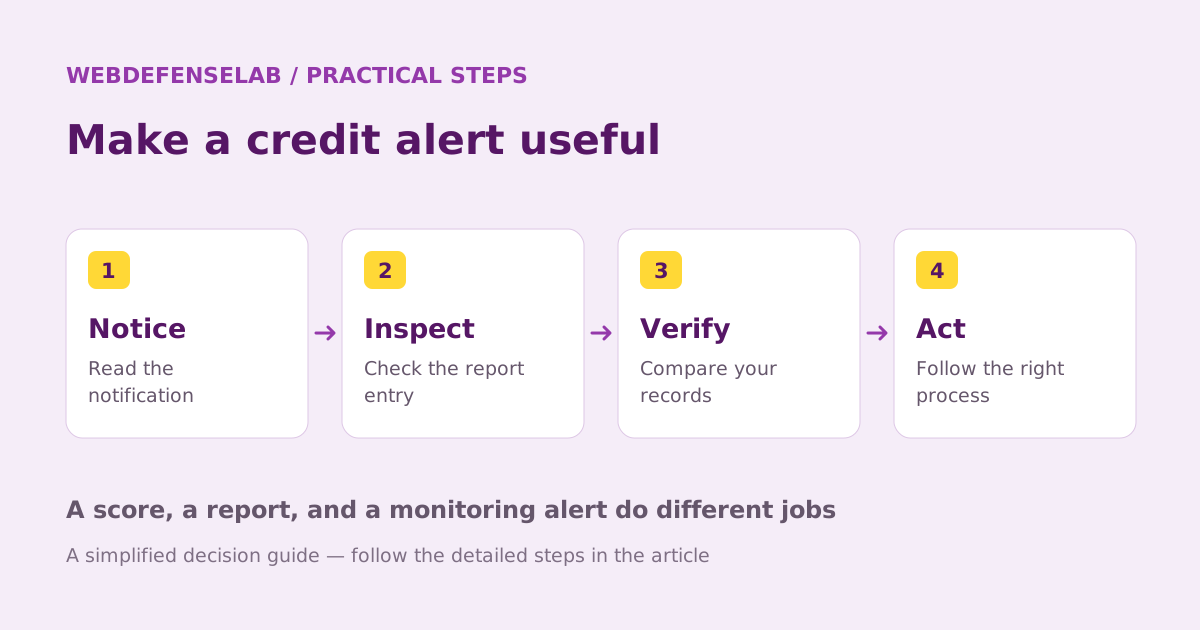
Open the service directly and identify the entry that changed. Compare the date, institution name, and account details with your own records. A recognizable application or a delayed update calls for a different response from an account you never opened.
If the entry appears incorrect, use the relevant dispute route and preserve the evidence. If identity theft is suspected, contact the affected institution and follow official recovery guidance. Do not buy a credit-repair promise in response to an alarming score notification.
For example, a score drop after a higher reported card balance may be understandable, while a new unfamiliar account deserves closer investigation. Focus on the report details and the required action. This guide compares tools; it does not promise a score increase, loan approval, or a particular lending rate.
Sources & review notes
Source review: September 25, 2026. This is a documentation-based assessment; we have not measured alert speed, product performance, or support outcomes. Product terms can change.
About the author
 Luca MoreauIdentity protection & practical security
Luca’s coverage turns identity-protection and everyday security questions into manageable checklists. The weekly briefings cover accounts, networks, and safer browsing, with a practical action readers can complete in a single sitting.
View profile and articles