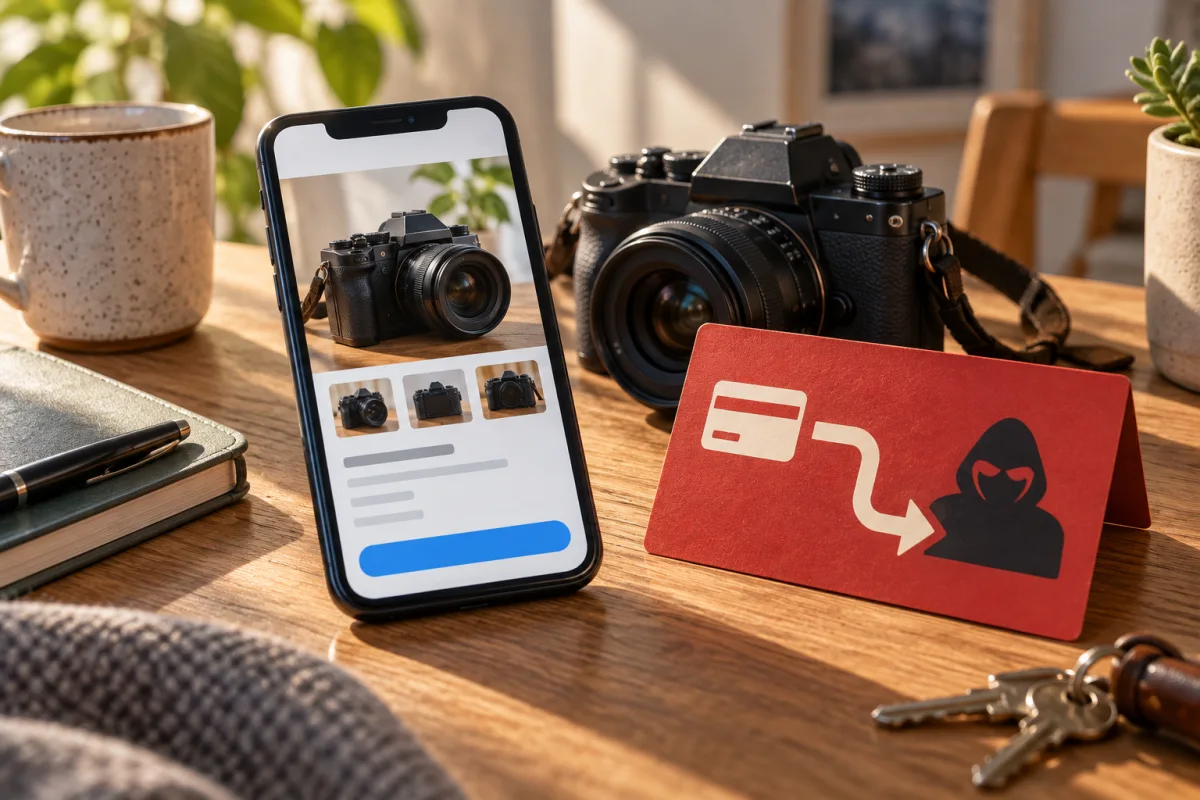
Check payments in your own account, keep verification codes private, and understand whether the specific transaction has purchase protection. A screenshot from the other person is not proof of payment.
Look at the transaction, not just the profile
A long-standing profile or friendly conversation can make a deal feel comfortable, but neither proves that the person currently controls the account legitimately. Evaluate what the buyer or seller is asking you to do. Urgency, an unusual payment route, and requests to move outside the normal process matter more than the profile photograph.
Before agreeing, write down the item, condition, price, collection or shipping arrangements, and any return agreement in the platform conversation. For an expensive item, decide what you can inspect and verify before paying. Avoid sending identity documents just to reassure a stranger.
For shipped purchases, read the marketplace’s current terms for that payment method and item category. Do not assume every Marketplace conversation is covered by the same buyer-protection program. Eligibility can depend on how and where the transaction is completed.
Recognize three common traps
| Request | Why it should stop the sale |
|---|---|
| “I paid; here is the screenshot” | The message may be fabricated; verify in your own account |
| “Refund the extra amount first” | An overpayment can be fraudulent or reversible |
| “Read me the verification code” | A code can authorize access or create an account in your name |
The FTC describes scams involving fake payment notices, excess checks, and stolen verification codes. A seller can lose both the item and money if they act on the notice before checking what actually happened. Do not pay a fee to “upgrade” an account merely because a buyer’s message says it is required.
If a notification arrives by email, open the payment provider independently. Check the recipient, amount, and actual transaction state. An amount showing as available does not establish that an unfamiliar check is genuine. Ask the payment provider about uncertainty before releasing valuable goods.
Arrange a safer handover
For local collection, choose an appropriate public meeting location and avoid giving a stranger unnecessary access to your home or devices. Inspect the item before finalizing the transaction. If it is a used phone or laptop, agree in advance how ownership and account removal will be demonstrated without exchanging passwords.
Keep the exchange simple. A buyer who suddenly introduces a courier, a different payer, and a refund request creates several opportunities for confusion. Pause when the agreed terms change. You can end the transaction without resolving every inconsistency in the other person’s story.
For shipping, retain tracking, the listing description, relevant photographs, and the payment record. Use the actual dispute process for the chosen service if something goes wrong. A threat in chat should not pressure you into abandoning a legitimate claim.
If you have already shared something
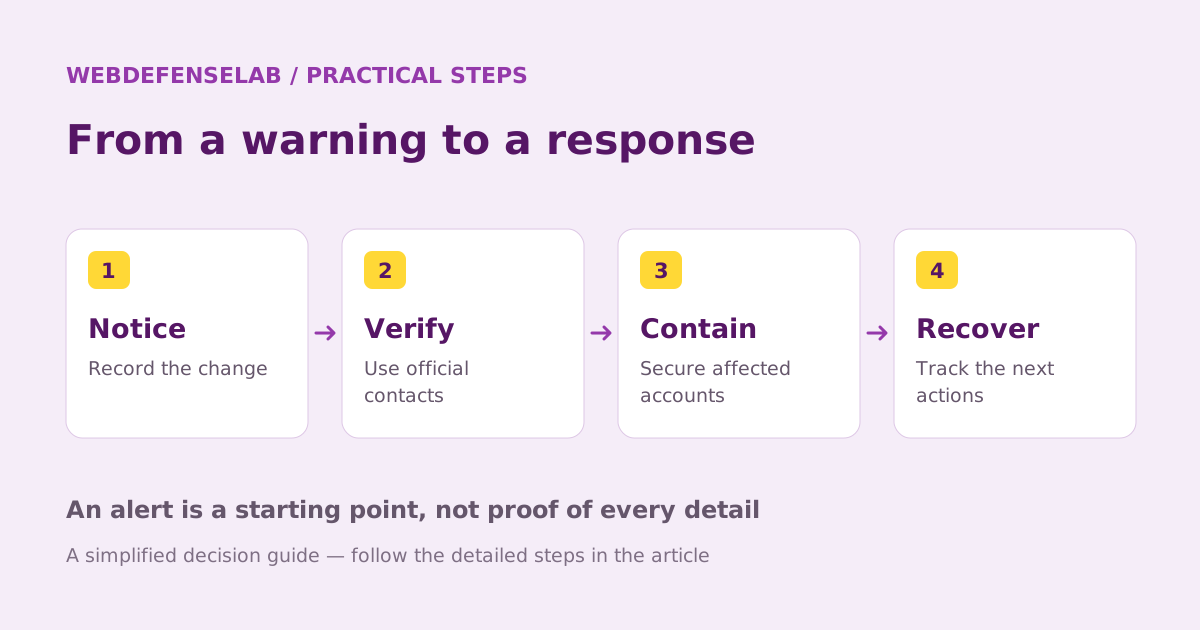
If you shared a password, change it through the official service and review active sessions. If you shared a verification code, identify which service issued it and use that service’s recovery process. If you sent money, contact the payment provider promptly; whether recovery is possible depends on the payment and circumstances.
Save evidence before blocking and reporting the account. Be cautious of anyone who then offers to recover the money for an upfront fee. Do not publish the other person’s personal data in an attempt to investigate them.
A VPN does not authenticate a buyer, and antivirus cannot decide whether a refund request is honest. Use unique account passwords and check for identity misuse if sensitive information was exposed.
Sources & review notes
Source review: September 25, 2026. Official resources support the steps above. U.S. procedures apply where stated; follow the relevant authority in your country.
About the author
 Luca MoreauIdentity protection & practical security
Luca’s coverage turns identity-protection and everyday security questions into manageable checklists. The weekly briefings cover accounts, networks, and safer browsing, with a practical action readers can complete in a single sitting.
View profile and articles