Credit Karma can be a useful free way to follow Equifax and TransUnion credit information. Its displayed VantageScore is not a promise of the score a particular lender will use or of approval for an advertised product.
What the free view tells you
Credit Karma describes free VantageScore 3.0 scores based on Equifax and TransUnion information. This can help you notice a change and explore the factors behind it. The date and source still matter when comparing a result with another service.
Credit Karma is not the credit bureau that received a lender’s original report. If an entry looks wrong, identify the underlying reporting company and source of the information. Keep the actual report detail, not just a screenshot of the score dial.
This review covers the documented service and how to use it sensibly. It does not evaluate the accuracy of a particular person’s report or predict the result of a credit application.
Why another score may be different
Different bureaus, scoring models, model versions, and calculation dates can produce different scores. A discrepancy does not by itself establish that either service made an error. Start by comparing those four details rather than assuming the higher number is the more accurate one.
If you are preparing for a major borrowing decision, ask the lender what information is relevant to its process. Do not apply simply because an app’s score moved upward or an offer appeared. Read the actual product terms and assess affordability independently.
| What you see | How to use it |
|---|---|
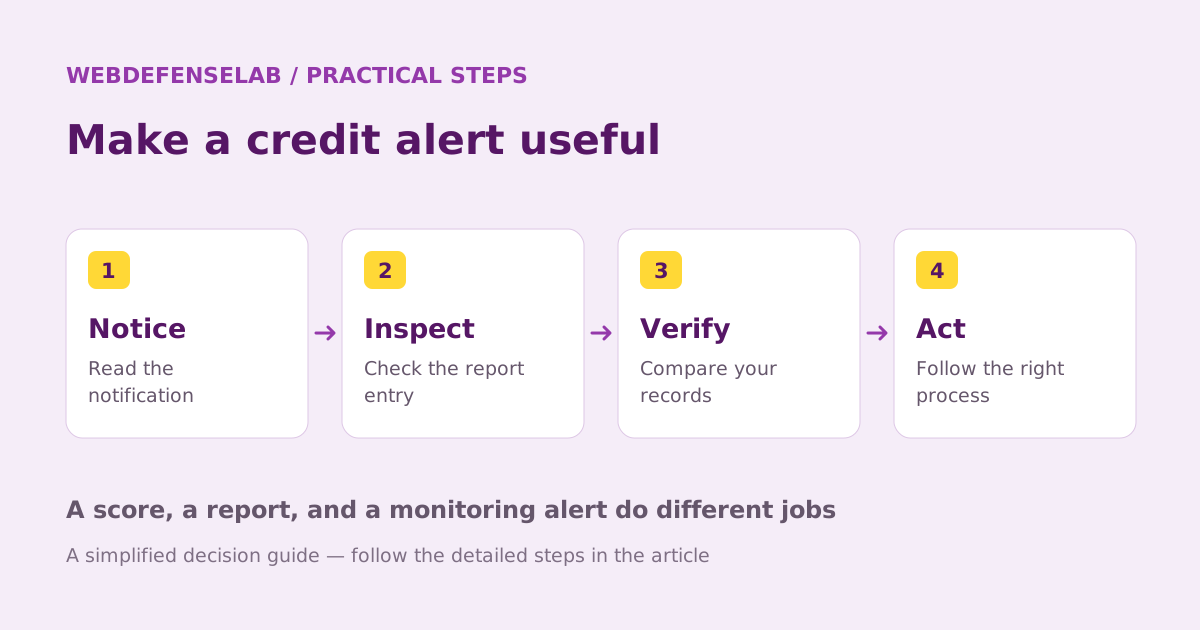
| A score movement | Inspect the factors and report entries behind it |
| An unfamiliar account | Verify it with the named institution |
| A product recommendation | Read eligibility, costs, and the provider’s terms |
| A different score elsewhere | Compare bureau, model, version, and date |
Keep recommendations separate from monitoring
A free financial app can also present commercial offers. Treat those recommendations as options to investigate, not as instructions to borrow or proof that an application will succeed. The monitoring task is to understand your information; the purchase decision is separate.
Before submitting an application, review fees, interest terms, and the kind of credit inquiry involved. Do not open an account solely to chase a short-term score change. If you need personal financial guidance, an app’s generalized suggestions do not replace an assessment of your circumstances.
Read the privacy settings and the explanation of how your information is used. Use a unique password and protect the email account associated with the service. Avoid signing in through a link in an unexpected message claiming that your score needs urgent repair.
Who may find it sufficient
A reader who wants a convenient routine for checking the two supported bureau-based views may find the free service helpful. Someone who needs a complete three-bureau monitoring arrangement or hands-on restoration assistance should compare the scope of other options.
For example, if a suspicious account appears only on a report from a bureau outside the view you are using, an unchanged app dashboard does not settle the issue. Obtain the relevant report through an official route and investigate that entry directly.
Compare Credit Sesame and other monitoring approaches based on coverage and purpose. Credit Karma is most useful when you understand the source of its information and use it to prompt informed checks rather than automatic applications.
Check current features, eligibility, and renewal terms.
Sources & review notes
Source review: September 25, 2026. This is a documentation-based assessment; we have not measured alert speed, product performance, or support outcomes. Product terms can change.
About the author
 Luca MoreauIdentity protection & practical security
Luca’s coverage turns identity-protection and everyday security questions into manageable checklists. The weekly briefings cover accounts, networks, and safer browsing, with a practical action readers can complete in a single sitting.
View profile and articles