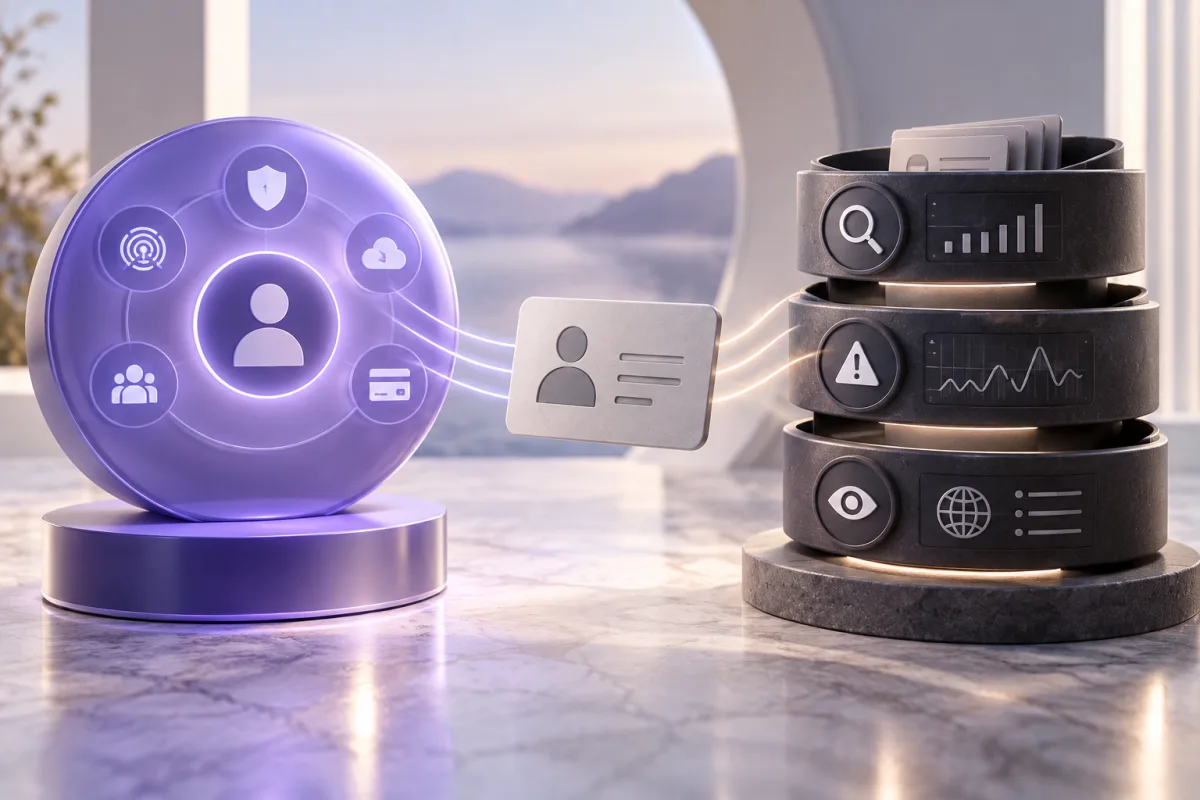
Identity protection services at a glance
For U.S. readers, the useful differences include monitored information, family coverage, and help after suspected identity theft. Verify eligibility and the selected plan before enrolling.
We may earn a commission from qualifying links. Affiliate disclosure · How we compare

Aura
Aura combines identity and credit monitoring with digital-security tools. It may fit a U.S. household that wants to manage several kinds of alerts in one subscription. Compare the people covered, which information you must enroll, and the recovery assistance available after a suspected problem.
- Identity monitoring with credit-related alerts
- Individual and family options with additional security tools
Before you choose Check U.S. eligibility, enrollment requirements, and the terms of any insurance. Monitoring can alert you to a problem; it cannot prevent every misuse of your identity.

LifeLock
LifeLock offers identity-monitoring subscriptions with access to restoration specialists. It is worth comparing if help responding to identity theft matters as much as receiving alerts. Its plans differ, so match the level of credit monitoring and recovery benefits to what you actually need.
- Identity alerts and access to restoration specialists
- Several plan levels, with Norton bundles also available
Before you choose Credit-bureau coverage and reimbursement limits vary by tier. Read eligibility and exclusions instead of treating an advertised maximum as guaranteed compensation.

Identity Guard
Identity Guard offers tiered monitoring plans for individuals and families. It is a candidate for readers who want to compare the type of information monitored before paying for a broader package. Look at the plan table closely: a lower price can mean a different set of credit and financial alerts.
- Data-breach and dark-web monitoring options
- Individual and family subscriptions at several coverage levels
Before you choose Credit monitoring and other features differ by tier. Confirm which adults and children are covered and what assistance follows an alert.

IDShield
IDShield pairs identity monitoring with restoration assistance from licensed private investigators. Consider it when the practical response to an identity problem is a priority. Review the steps for opening a case, what the service can handle on your behalf, and the relevant individual or family coverage.
- Identity and credit-monitoring options
- Restoration assistance from licensed private investigators
Before you choose Check geographic eligibility, credit coverage, family definitions, and benefit terms. Alerts are not a substitute for reviewing your accounts and responding promptly.
Sources and how to use this shortlist
These summaries use provider documentation and our selection advice, not hands-on performance scores. Features, plans, and regional availability can change. Confirm the first payment, renewal cost, and cancellation terms before subscribing.
- Aura product documentation
- LifeLock product documentation
- Identity Guard product documentation
- IDShield product documentation
Sources checked September 25, 2026. Full reviews explain the scope and limitations in more detail.

Consider Aura for a combined security bundle, LifeLock for its range of monitoring plans, Identity Guard for a focused plan comparison, and IDShield when restoration assistance is your priority. These are starting points based on documentation, not measured winners.
Start with the job you want done
Identity-protection services combine different jobs: watching selected data sources, sending alerts, helping resolve incidents, and sometimes reimbursing covered losses. A longer feature list does not show which job a service performs well. Write down the help you would actually use before choosing a subscription.
A person responding to an existing incident needs a different conversation from someone comparing future monitoring. Ask explicitly whether an incident that began before enrollment is eligible for assistance or coverage. Do not infer that from a general promise of protection.
| Your priority | A starting point | The important check |
|---|---|---|
| A combined protection account | Aura | Which security tools the chosen plan includes |
| Several levels of identity monitoring | LifeLock | Exact bureau coverage and renewal terms |
| Comparing monitoring tiers | Identity Guard | What the selected tier leaves out |
| Help handling restoration | IDShield | How case authorization and assistance work |
Separate alerts from prevention
An alert tells you that a monitored event was detected. It cannot promise that every misuse will be noticed or that the event will be stopped. Similarly, monitoring a credit file is different from restricting access to that file. Keep this distinction in your notes when two providers use similar marketing language.
There are useful steps you can take without a subscription: secure important accounts, review reports through official channels, and learn how freezes work. Paying can add convenience or assistance, but the purchase should solve an identifiable gap in that routine.
For a family, check each adult’s access, enrollment requirements, and ability to manage their own information. A household total in a headline does not explain every eligibility rule. Make sure the people you intend to cover actually qualify.
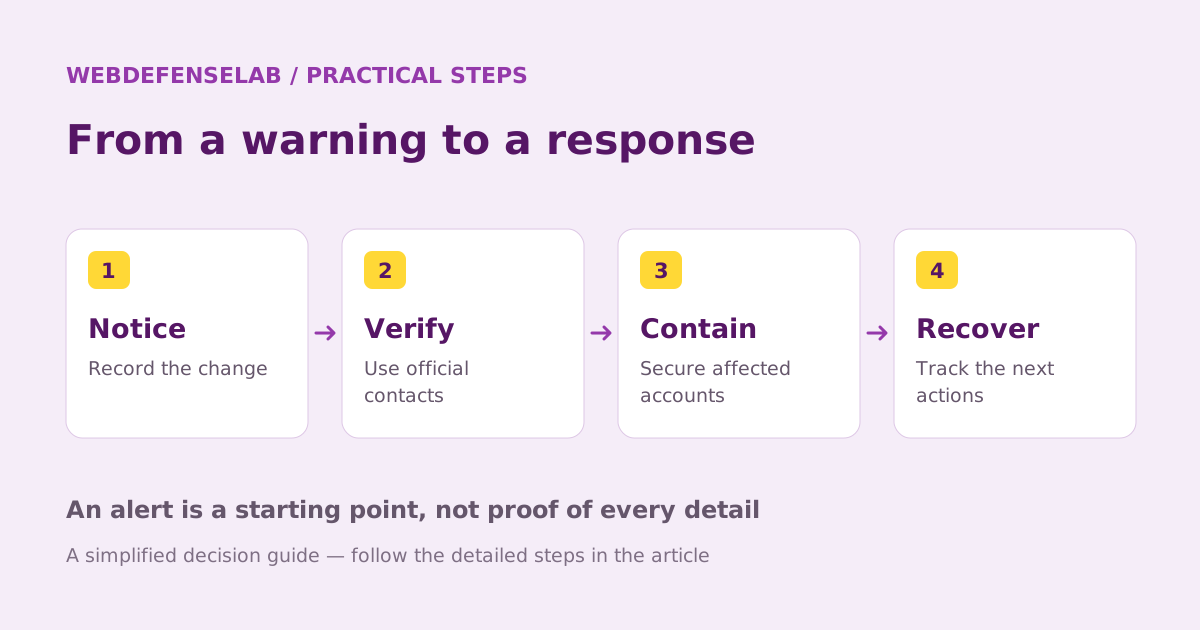
Compare the complete service agreement
Create a one-page comparison with the monitored bureaus, relevant types of identity data, support contact options, annual cost, and cancellation process. Record the plan name beside every entry. Comparing one provider’s entry plan with another provider’s top plan can create a misleading impression of value.
For insurance or reimbursement, open the policy details rather than copying the largest dollar figure. Look for the covered event, excluded losses, reporting deadlines, documentation requirements, and who is insured. A maximum limit is not a promise that a particular loss will be repaid.
Ask whether you will have a named case contact and which tasks remain yours. Assistance can reduce work, but you may still need to supply statements, verify your identity, and communicate with organizations that require your direct authorization.
A practical household decision
Imagine two adults already paying for antivirus and a password manager. An identity bundle may duplicate those tools. They should price the monitoring and recovery help they need, then compare that total with the bundle after renewal. If the bundle replaces existing subscriptions, they should verify the replacement features before canceling anything.
Another reader may mainly want credit-change alerts. Start with credit-monitoring options instead of assuming the broadest identity package is necessary. If the concern is exposed login data, review breach and dark-web monitoring and the action needed after an alert.
Our approach is to match documented capabilities to a use case. We have not submitted simulated fraud, measured notification delays, or tested recovery outcomes. Use the individual reviews and official plan terms to resolve the details that matter to your household.
Sources & review notes
Source review: September 25, 2026. This is a documentation-based assessment; we have not measured alert speed, product performance, or support outcomes. Product terms can change.
About the author
 Luca MoreauIdentity protection & practical security
Luca’s coverage turns identity-protection and everyday security questions into manageable checklists. The weekly briefings cover accounts, networks, and safer browsing, with a practical action readers can complete in a single sitting.
View profile and articles